
Personal Identification Cards
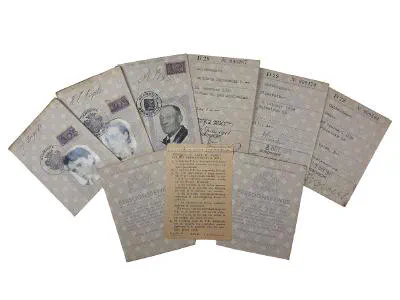
The proposal for this system was rejected by the Cabinet-de Geer II in March 1940. Therefore, the identity card would not be implemented before the outbreak of the war. After the capitulation in May 1940, the German Sicherheitspolizei quickly discovered that there was no identification document in the Netherlands with a photo of the holder. In Germany, they had the “Kennkarte,” but in the Netherlands, apart from a distribution card without a photo, there was nothing. As the Germans were certainly interested in having a general identification document for every Dutch citizen, they contacted the Dutch Secretary-General of Justice. That was Mr. Tentink, and he wrote a letter to his pro-German counterpart, Karel Johannes Frederiks, the Minister of Internal Affairs. And so, the task of creating the identity card fell back to Lentz. Lentz was convinced that Germany would win the war, so he diligently started working on it. He not only simply created an identity card, but he also made one that was significantly better than the German “Kennkarte.” Additionally, he provided the Germans with information about both non-Jewish and Jewish Dutch citizens. An overzealous Dutch official, without fully realizing the societal consequences, ensured that the Germans would have complete control over the population. These very tragic developments later made it effortless for the Germans to identify who was Jewish and who would thus be deported.
On March 1, 1941, the identity card was introduced. Issuing of the identity cards began in April 1941, and from January 1, 1942, every resident of the Netherlands was required to carry the identity card. In the summer of 1941, each identity card held by Jewish citizens was also stamped with two “J"s, another idea of Lentz. Combined with the yellow Star of David that every Jewish citizen was required to wear on their clothing starting from May 3, 1942, it became nearly impossible to escape deportation. The resistance made many attempts to forge the identity cards, but they were never entirely successful.
Lentz received only a three-year prison sentence after the war, despite the fact that his diligent work made it easier for the Germans to deport and murder hundreds of thousands of Jews, as well as potentially harm thousands of other Dutch citizens in different ways.
The personal identity card: a Dutch invention, gratefully implemented by the Germans1.
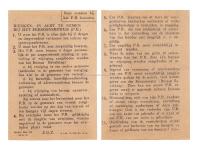
Instructions to be observed regarding the identification card
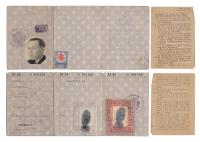
Personal Identification Document for Mr. Adrianus Poots and his wife Arjaantje 't Jong - Dordrecht.
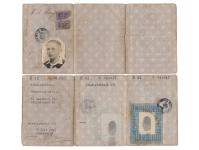
Personal Identity Card Zwijndrecht
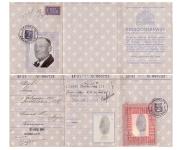
Personal Identity Cards Dordrecht
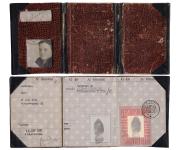
Persoonsbewijs 's Gravendeel
Source: The explanation and information regarding the identification card have been gratefully sourced from the website www.persoonsbewijzen.nl by Mr. Matthijs de Die le Clercq. ↩︎