
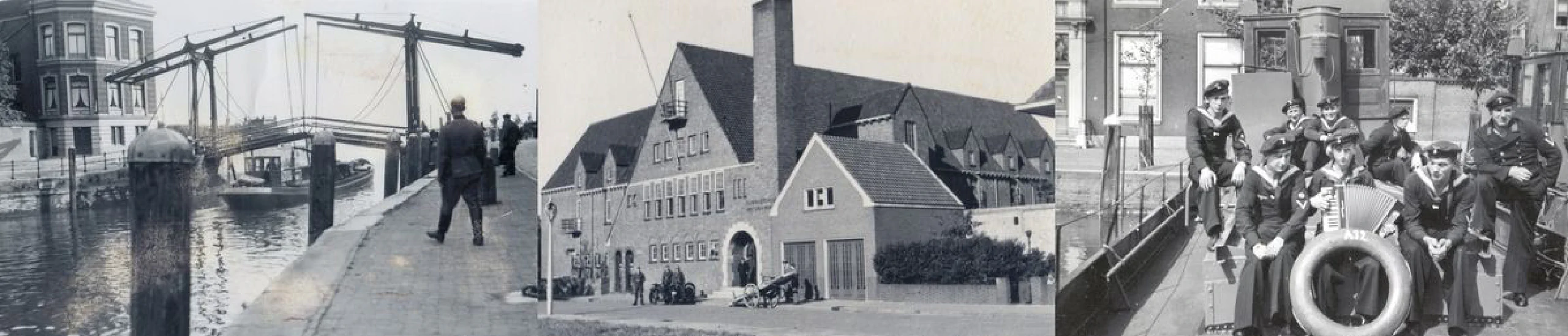
Deathletters Josef Winterl - Dordrecht
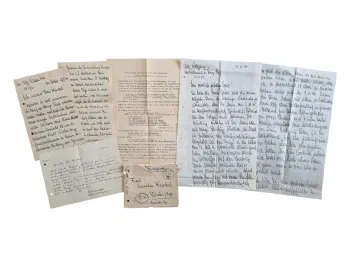
This set of letters was sent to the widow of Obergefreiter Josef Winterl. Josef Winterl was born on 24 March 1909 in Etzenricht, Bavaria, Germany. He was married to Amalie Winterl. Josef served with the staff company of Infantry Replacement Battalion 63. His Erkennungsmarke number (Dogtag number) was 2313. Winterl was likely killed in the area around Moerdijk in November 1944.
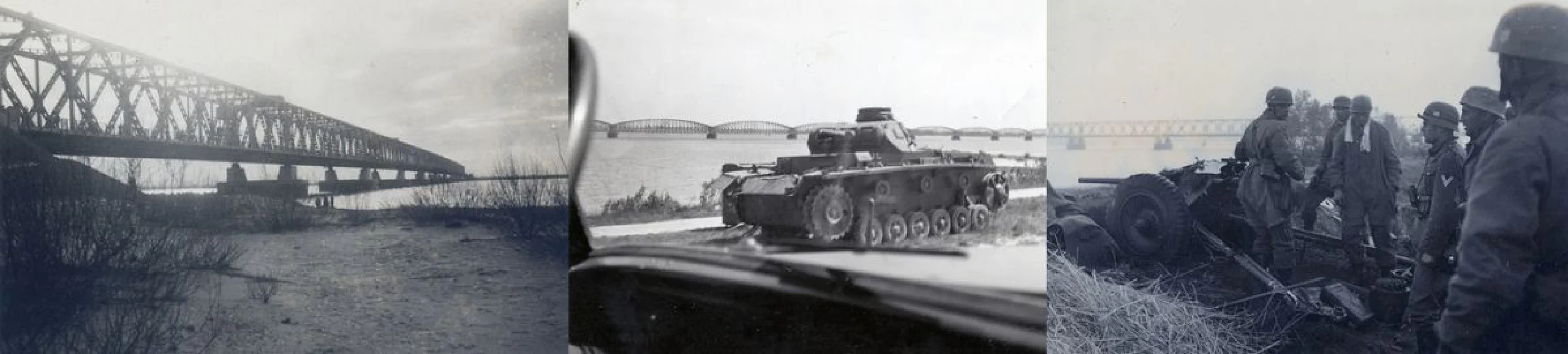
Obergefreiter Josef Winterl was part of a construction group that, during the night of 3 to 4 November 1944, was deployed south of the River Maas near Dordrecht to repair disruptions in telephone lines. During this assignment, the group came under enemy artillery fire. The first shell landed close to the men, prompting them to take cover behind a Sturmgeschütz. Shortly afterwards, a second shell struck at a distance of about three metres. This direct hit severely and fatally wounded Winterl and three other comrades with numerous shell fragments, particularly in their feet. They received first aid on the spot from the medic of the 2nd Company and were then immediately transported to the main dressing station in Dordrecht.
Sanitäter Ost visited Winterl and found him in the operating hall under anaesthesia. Due to the amount of blood he had lost, he could not yet undergo surgery. The next day, Winterl was conscious, clear, and responsive. He had an appetite and wished to be operated on to relieve the pain. The doctor had informed him that his right foot would have to be amputated. Winterl postponed writing a letter to his wife until the following day, convinced that he would survive the operation. However, Sanitäter Ost, who visited him, noted that Winterl was extremely weak from blood loss.
On 6 November, Winterl was visited again by Ost, this time together with another non‑commissioned officer. He still wished to undergo surgery, and the doctor confirmed that amputation was urgently necessary. Winterl asked Ost to write to his wife and to send his radio set to her. During the following night, he died of heart failure caused by blood loss. He did not wake up after the operation and, according to the letters, passed away without suffering.
Winterl’s company commander, Wolfgang Uhl, reported that Winterl died on 7 November 1944 at the main dressing station in Dordrecht as a result of his wounds. He described Winterl as someone who had long served as a line‑repair marksman and, through his dedication, had contributed to restoring important field‑telephone connections. The company found it difficult to accept that Winterl would not return. On 9 November 1944, Winterl was buried with military honours at the heroes’ cemetery in Dordrecht. His coffin was adorned with a green wreath and colourful autumn flowers. The Reich war banners hung at half‑mast as the coffins were handed over by the clergy. Comrades from the company took part in the ceremony and accompanied him to his final resting place.
The document set consists of a letter from Oberpfarrer (military chaplain) Kornrumpf, addressed to Frau Winterl; a report on the burial of several German soldiers on 9 November 1944 at the cemetery in Dordrecht; a letter from the company commander Wolfgang Uhl, also addressed to Frau Winterl; and a letter from Sanitäter Ost, likewise addressed to Frau Winterl.
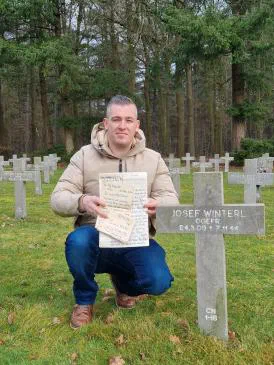
Obergefreiter Josef Winterl died of his wounds on 7 November 1944. He was buried on 9 November 1944 at the municipal cemetery in Dordrecht, in row 26, grave 51. After the war, on 25 August 1947, he was reinterred at the German military cemetery in Ysselsteyn, Limburg, where he remains buried to this day in section CN, row 1, grave 16.
Letter from the German military chaplain to Frau Winterl
The first letter is the letter from the German military chaplain addressed to Frau Winterl. He writes:
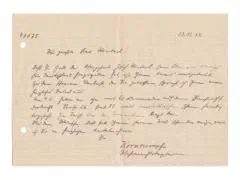
“40075
13.11.44
Sehr geehrte Frau Winterl
Dass ihr gatte der Obergefreiter Josef Winterl sein Leben im kampf für Deutschland hingegeben hat ist ihnen bereits mitgeteilt. Zur ihnen schweren Verlust der Sie getroffen, spreche ich ihnen mein herzlichstes Beileid aus.
Am 9.11 haben wir dann mit 60 kameraden auf dem Heldenfriedhoff Dordrecht Reihe 26 Grab 51 mit Militairischen Ehre feierlich beigezetzt. Ein Bericht über die Trauerfeirer liegt bei.
Möchten wünschen, daß Gott ihnen ferner Kraft schenken möge, zeige ich Sie in herzlichster Anteilnahme.
Kornrumpf
Wehrmachtoberpfarrer”
Translated:
“40075
13.11.44
Dear Mrs Winterl,
You have already been informed that your husband, Obergefreiter Josef Winterl, has given his life in the struggle for Germany. I offer you my sincere condolences for the heavy loss that has befallen you.
On 9 November, we solemnly buried him with military honours together with 60 comrades at the heroes’ cemetery in Dordrecht, row 26, grave 51. A report of the funeral ceremony is enclosed.
In the hope that God may grant you further strength, I express to you my deepest sympathy.
Kornrumpf
Military chaplain”
Report on the burial of German soldiers at the municipal cemetery in Dordrecht
Attached to the chaplain’s letter is also a report on the burial of a large group of German soldiers at the municipal cemetery of Dordrecht on 9 November 1944.
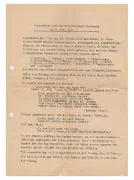
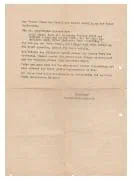
It reads:
“Trauerfeier auf dem Ehrenfriedhof Dordrecht
am 9. Nov. 1944 Nachmittag um 4 Uhr war die Trauerfeier angesetzt. In einer langen Gruft standen nebeneinander, geschmückt mit Reichskriegsflaggen und Stahlhelmen in langer stummer Reihe, 61 Särge von Gefallenen der letzten Tage; meist solchen, die auf dem Hauptverbandsplatz Dordrecht eingeliefert gewesen waren. 9 Soldaten, 1 Matrose, 1 Arbeitsmann, 1 Hauptvormann, 2 Obersoldaten, 12 Gefreite, 24 Obergefreite, 2 Stabsgefreite, 6 Unteroffiziere, 1 Feldwebel, 1 Wachtmeister und 1 Leutnant,
Angehörige von allen Wehrmachtteilen und vom Reichsarbeitsdienst. Außer dem Ehrenzug beteiligten sich an der Feier über 100 Soldaten, darunter 6 Offiziere.
Zu Beginn der Trauerfeier las ich: „Wer weiß, wie nahe mir mein Ende ………“ Psalm 39, 5–8, 1. Kor. 15, 35–57 in Auswahl, darauf den Vers: „Wenn plötzlich in dein Lebenslicht Die Finsternis der Nächte bricht, Du nicht begreifst, woher sie kommt, Du nicht begreifst, zu was sie frommt, Dich tiefer Gram macht sprachlos stumm, Tröst’ dich der Spruch: ‚Gott weiß warum.‘“ Justinus Kerner Meiner Ansprache legte ich die Worte zu Grunde: Matth. 5,4 „Selig sind, die da Leid tragen, Denn sie sollen getröstet werden.“ Und Joh. 16,33 „In der Welt habt ihr Angst, Aber seid getrost, ich habe die Welt überwunden.“
In den Kämpfen südlich der Maasübergänge, an den Moerdijk-Brücken, haben die Kameraden ihr Leben gelassen. Eine Verpflichtung bedeutet das für uns Kameraden. Auch wir haben getreu unserem Fahneneide unsere Pflicht bis zum Letzten zu erfüllen. Wir gedachten der vielen Angehörigen in der Heimat, der 24 Witwen, der vielen Väter und Mütter, der Brüder und Schwestern und auch der Waisen.
Der Bruder eines der Gefallenen konnte zufällig an der Feier teilnehmen. Für die Angehörigen beteten wir: „Hilf ihnen, dass sie in deinem Frieden still und getröstet wurden und an der Wunde, die du ihnen ge- schlagen hast, deine lindernde Hand verspüren.“ Wir beteten das Vater Unser, drei Hände voll Erde wurden in die Gruft geworfen, darauf der Segen erteilt. Der Älteste der Offiziere sprach darauf ein kurzes Wort des Nachrufes, danach wurden die zahlreichen Kränze niedergelegt und der Ehrenzug schoss eine dreifache Salve. Trübe und grau hing der Novemberhimmel voller Regenwolken und auch während der Feier gingen Regenschauer nieder. Die Feier wird allen Teilnehmern in ihrem Ernst und in ihrer Würde unvergessen bleiben.
Kornrumpf
Wehrmachtoberpfarrer”
Translated:
“Funeral ceremony at the Ehrenfriedhof Dordrecht on 9 November 1944 The funeral ceremony was scheduled for four o’clock in the afternoon. In a long grave, 61 coffins of fallen soldiers from the past days stood side by side, adorned with Reich war flags and steel helmets in a silent row; most of them had been brought to the main dressing station in Dordrecht. Nine soldiers, one sailor, one Arbeitsmann, one Hauptvormann, two Obersoldaten, twelve Gefreite, twenty‑four Obergefreite, two Stabsgefreite, six Unteroffiziere, one Feldwebel, one Wachtmeister, and one Leutnant — all from various branches of the Wehrmacht and the Reich Labour Service. In addition to the honour guard, more than one hundred soldiers took part in the ceremony, including six officers.
At the beginning of the funeral ceremony, I read: “Who knows how near my end is ………” Psalm 39:5–8, 1 Corinthians 15:35–57, followed by the verse: “When suddenly in your life’s light The darkness of night breaks forth, You do not understand where it comes from, You do not understand what it means, Deep sorrow renders you silently still, Take comfort in the saying: ‘God knows why.’” Justinus Kerner For my address, I took as my starting point: Matthew 5:4 “Blessed are those who mourn, For they shall be comforted.” And John 16:33 “In the world you have fear, But be of good cheer, I have overcome the world.”
In the fighting south of the Meuse crossings, near the Moerdijk bridges, the comrades gave their lives. That places an obligation upon us, their comrades. We too must, faithful to our oath to the flag, fulfil our duty to the utmost. We thought of the many family members back home, of the 24 widows, the many fathers and mothers, brothers and sisters, and also the orphans. The brother of one of the fallen happened, by chance, to be able to attend the ceremony.For the bereaved we prayed: “Help them, that they may become still and comforted in Your peace, and that in the wound You have struck, they may feel Your soothing hand.” We prayed the Lord’s Prayer; three handfuls of earth were cast into the grave chamber, after which the blessing was spoken. The senior officer then delivered a short memorial address, after which the many wreaths were laid and the honour guard fired a triple salvo. Gloomy and grey, the November sky hung heavy with rain clouds, and even during the ceremony showers fell. The ceremony will remain unforgettable for all participants in its gravity and dignity.
Kornrumpf
Military chaplain”
Letter from Oberleutnant and company commander Wolfgang Uhl to Mrs Winterl
The second letter is from Oberleutnant and company commander Wolfgang Uhl to Mrs Winterl. He writes:
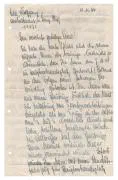
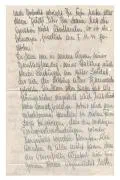
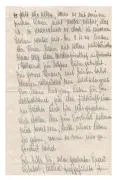
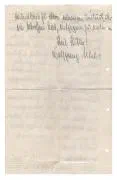
“Uhl. Wolfgang.
Oberleutnant u. Komp. Chef.
05372
11.11.44.
Sehr verehrte, gnädige Frau!
Ich habe die harte Pflicht und die schwere
Aufgabe, Ihnen die traurige Nachricht zu übermitteln, dass Ihr Mann am 7. 11. 44 im Hauptverbandsplatz Dordrecht / Holland an den Folgen seiner schweren Verwundung gestorben ist. Ihr Mann war in der Nacht mit seinem Bautrupp Südlich der Maas zur Pulstörung von Fernsprechleitungen eingesetzt als sein Trupp in der Nacht vom 3. auf 4. November durch feindliche Artillerie beschossen wurde. Ein Volltreffer traf der Bautrupp Ihres Mannes wodurch dieser schwer verwundet wurde. Sofort würde Ihr Mann mit einem Sanitäts-fahrzeug zum Hauptverbandsplatz nach Dortrecht gebracht. Die Ärzte haben alles daran gesetzt, aber Ihr Mann hat die Operation nicht überstanden, er ist ohne Schmerzen, friedlich am 7. 11. 44 gestorben. Ihr Mann war in seinem Wesen, seiner Dienstauffassung, seiner Haltung und seinen Leistungen ein guter Soldat, der sich der Achtung aller Kameraden erfreute. Ihr Mann war lange Zeit als Störungsschießer eingeteilt und hat durch seine einsatzfreudige Arbeit und seine aufgeschlossenes Handeln im vielen fällen dazu beigetragen, dass die wichtigen Feldsprechverbindungen wieder hergestellt werden konnten. Wir konnten es alle nicht fassen dass der Obergefreite Winterl sich zur grossen Armee abgemeldet hatte.
Es fehlt uns allen, wenn er mit seinem frischen Wesen nicht mehr unter uns ist, so marschiert er doch in unseren Reihen weiter mit. Am 9.11.44 haben wir Ihren dann mit allen militärischen Ehren auf dem Heldenfriedhof in Dortrecht, Holland zur letzten Ruhe gebettet. Ein grüner Kranz mit bunten Herbstblumen schmückte sein Soldatengrab.
Ihr dann hat sein Leben für Großdeutschland, für die Zukunft unseres Reiches und für uns gegeben. Wir wollen ihn zum Vorbild nehmen und bereit sein, auch unser Leben so zu geben, wenn es von uns gefordert wird. Ich bitte Sie, sehr geehrte Frau Winterl, unsere tiefgefühltes Au. Teilnahme für deine schweren Verlust, der Sie betroffen hat, aufgegen zu nehmen.
Heil Hitler!
Wolfgang Uhl.”
Translated:
“Uhl, Wolfgang
Oberleutnant and company commander
05372
11.11.44
Most esteemed and noble lady,
I have the heavy duty and difficult task of bringing you the sorrowful news that your husband passed away on 7 November 1944 at the main dressing station in Dordrecht, Holland, as a result of his severe injuries. Your husband had been deployed at night with his construction group south of the Meuse to repair disruptions in telephone lines when, during the night of 3 to 4 November, his group came under enemy artillery fire. A direct hit struck your husband’s construction team, causing him to be gravely wounded. He was immediately taken by ambulance to the main dressing station in Dordrecht. The doctors tried everything, but your husband did not survive the operation. He died peacefully and without pain on 7 November 1944. In his nature, his sense of duty, his bearing, and his performance, your husband was a good soldier who enjoyed the respect of all his comrades. For a long time he served as a line‑repair marksman, and through his dedication and his open, dutiful conduct he contributed in many cases to restoring important field‑telephone connections. None of us could comprehend that Obergefreiter Winterl had reported himself to the great army.
We all miss him now that, with his fresh and lively nature, he is no longer among us — and yet he continues to march on in our ranks. On 9 November 1944 we accompanied him, with full military honours, to his final resting place at the heroes’ cemetery in Dordrecht, Holland. A green wreath with colourful autumn flowers adorned his soldier’s grave.
Your husband has given his life for Greater Germany, for the future of our Reich, and for us. We wish to take him as an example and be prepared to give our lives in the same way, should it be asked of us. I ask you, most esteemed Mrs Winterl, to accept our heartfelt sympathy for the heavy loss that has befallen you.
Heil Hitler!
Wolfgang Uhl”
Letter from medic Unteroffizier Wilhelm Ost to Mrs Winterl
The last letter is from medic Unteroffizier Wilhelm Ost. He was a good friend of Josef Winterl. He writes:
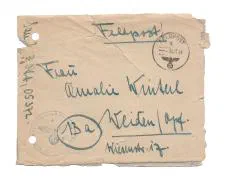
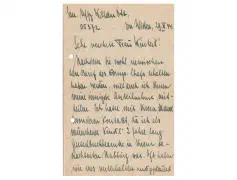
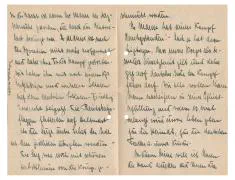
“San. Uffz. Wilhelm Ost,
05372. Am Weste(n), 29. XI. 44.
Sehr verehrte Frau Winterl!
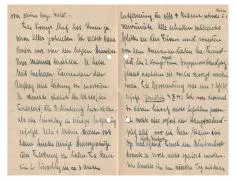
Nachdem Sie wohl inzwischen den Brief des Komp. Chefs erhalten haben werden, will auch ich Ihnenmeine innigste Anteilnahme mitteilen. Ich hatte mit Ihrem Mann besonderen Kontakt, da ich als Münchener Kindl 2 Jahre lang Grundbuchbeamte in Ihrem benachbarten Nahhüng war. Oft haben wir uns unterhalten und geplaudert vonn schönen bayr. Wald! Der Komp.-Chef hat Ihnen ja schon alles geschrieben. Ich selbst kann Ihnen nur von den letzten Stunden Ihres Mannes berichten. Er hatte mit mehreren Kameraden den Auftrag eine Leitung entstören. Er versuchte südlich der Maas (bei Dordrecht) die Verbindung herzustellen, als ein Einschlag in seiner Umgebung erfolgte. Alle 4 Mann stellten sich dann hinter ein Sturmgeschütze üm Deckung zu haben. Es kam ein 2. Einschlag in ca. 3 Meter Aufsprengung, die alle 4 Mann schwer u tödlich verwundete.
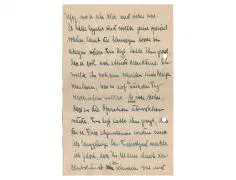
Alle erhielten zahlreiche Splitter an den Füßen und wurden von dem Kommandierten San. Dienstgrad der 2. Komp. Sofort zum Truppenverbandplatz gebracht, nachdem sie vorher versorgt worden waren. Die Verwundung war um 4 Uhr 30 erfolgt. (Glaublich, 4. XI. 44.) Ich war diesmal zu diesem Einsatz nicht befohlen gewesen. Ich machte aber sofort der Hauptverbandsplatz auf, wo ich Ihren Mann im Op. Hal ünter narkose fand. Durch den Blutverlust konnte er noch nicht operiert werden. Ich besuchte ihn am nächsten Tag mit einem Uffz. Wo er sehr klar und sicher war. Er hatte Appetit und wollte gerne operiert werden, damit die Schmerzen besser zu ertragen waren. Der Arzt hatte ihm gesagt, dass er wohl noch abends draukäme. Ich wollte ihn noch zum schreiben eines Briefes veranlassen, was er auf den nächsten Tag verschrieben wollte. Er war sicher, dass er die Operation überstehen würde. Der Arzt hatte ihm gesagt, dass der re. Fuß abgenommen werden muss. Als langjähriges San. dienstgrad merkte ich jedoch, dass der Mann durch den Blutverlust viel zu schwach war und Eine Operation die Entscheidung bringen werde.
Am 6. XI. besuchte ich Ihren Mann wieder. Auch Herr St. Krückebey wollte den Besuch mitmachen. Auch an diesem Tage wollte er unbedingt operiert werden, was ihm auch der Arzt zusagte, da der Zustand des Fusses gebieterisch die Abnahme des Fusses (nicht beines) forderte. Ihr Mann war trotz allem sehr zuversichtlich und bat, ich solle auch an Sie schreiben und den Radio-Apparat an Sie absenden & das will ich auch heute einlösen.
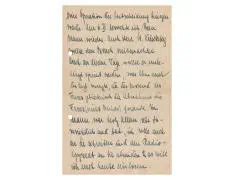
In der Nacht ist dann ihr Mann an Herzschwäche gestorben, die durch den Blutverlust bedingt war. Ihr Mann ist nach der Operation nicht mehr aufgewacht und daher ohne Todes kampf gestorben. Wir haben ihm mit noch einem kp. Angehörigen und weiteren Soldaten auf den deutschen Soldaten-Friedhof Dordrecht beigesetzt. Die Reichskriegsflaggen flatterten auf Halbmast als die Särge unter Salut der Mode von den Geistlichen übergeben wurden. Der Sarg war noch mit schönen Herbstblumen von der Komp. Gesmückt worden.
Ihr mann hat seinen Kampf durchgestanden! Auch er hat dazu beigetragen, dass unser Korps als besonders einsatzbereit gilt und daher ganz auf deutscher Erde den Kampf führen darf. Wir alle wollen Ihrem Mann nacheifern in seiner Pflichterfüllung und wenn es mal verlangt wird unser Leben geben für die Heimat, für die deutschen Frauen u. unsere Kinder. In diesem Sinne will ich Ihnen die Hand drücken und Ihnen die letzten Grüsse ihres Mannes überteilen.
Ihr Ergebenen Wilhelm Ost.
Translated:
“San. Uffz. Wilhelm Ost,
05372. At the West, 29 XI 44.
Most esteemed Mrs Winterl!
Since you have probably already received the letter from the company commander, I too wish to express my deepest condolences. I had a special connection with your husband, because as a “Münchener Kindl” I worked for two years as a land‑registry clerk in your neighbouring area. We often spoke and chatted together about the beautiful Bavarian Forest. The company commander has already written everything to you. I myself can only tell you about your husband’s final hours. He, together with several comrades, had been given the task of repairing a cable. He was trying to restore the connection south of the Meuse (near Dordrecht) when a shell landed nearby. All four men then took cover behind a Sturmgeschütz. A second shell struck about three metres away.
The explosion severely and fatally wounded all four men. They received countless shell splinters in their feet and were immediately taken to the dressing station by the duty medical NCO of the 2nd Company, after first receiving care on the spot. The injury occurred at 4:30 a.m. (presumably 4 XI 44). I was not called up for this deployment on that occasion. However, I went straight to the main dressing station, where I found your husband in the operating hall under anaesthesia. Because of the blood loss, he could not yet be operated on. The next day I visited him together with another NCO. He was very clear and fully conscious. He had an appetite and very much wanted to undergo the operation so that the pain would be easier to bear. The doctor had told him that he would probably be operated on that evening. I tried to persuade him to write a letter, but he wished to postpone it until the next day. He was convinced that he would survive the operation. The doctor had told him that the right foot would have to be amputated. As a long‑serving medical NCO, however, I noticed that the man was far too weak from blood loss and that the operation would decide his fate.
On 6 XI I visited your husband again. Mr St. Krückebey also wished to come along. That day as well, your husband was determined to undergo the operation, which the doctor also promised him, because the condition of the foot urgently required amputation (of the foot, not the leg). Despite everything, your husband was very hopeful and asked me to write to you and to send the radio set on to you — and that is what I intend to do today.
During the night your husband passed away from heart failure caused by the loss of blood. He did not wake up after the operation and therefore died without any struggle. Together with another member of the company and additional soldiers, we buried him at the German soldiers’ cemetery in Dordrecht. The banners of the Reich fluttered at half‑mast as the coffins were handed over by the clergy under salute. The coffin was also decorated by the company with beautiful autumn flowers.
Your husband has endured his struggle! He too has contributed to our corps being regarded as exceptionally ready for deployment and therefore permitted to fight entirely on German soil. We all wish to follow your husband’s example in fulfilling our duty and — should it be asked of us — to give our lives for the fatherland, for the German women, and for our children. In this spirit I wish to clasp your hand and convey to you your husband’s final greetings.
Your devoted Wilhelm Ost”