
Ration coupons and distribution cards
On this page you will find original ration coupons and distribution cards from Dordrecht during the war.
To provide the entire population with food during times of scarcity, the Dutch government decided to introduce rationing. For this purpose, the government used distribution stamp cards and coupons. This ensured a fair distribution of foodstuffs. Below you can see examples of such coupons and distribution stamp cards from the municipality of Dordrecht and surrounding areas.
The distribution stamp card cannot be viewed separately from the history of the Second World War. As in the rest of the country, the card was also used in the municipality of Dordrecht. There was a first and a second model. The first model was introduced at the end of September 1939. To provide the entire population with food during times of scarcity, the Dutch government decided to introduce rationing. The government used stamp cards for this purpose. This ensured a fair distribution of foodstuffs and discouraged hoarding.
The second‑model distribution stamp card was introduced by the German occupier. It was implemented at the end of 1943 as a countermeasure against the many forged identity cards that were in circulation. During the war, the Germans decided to introduce a second type of stamp card in order to cut off the many people in hiding from the distribution of foodstuffs. This stamp card was linked to the identity card by means of a seal, making it nearly impossible for people in hiding to obtain one. This was one of the reasons why the resistance frequently targeted distribution offices and made extensive efforts to forge stamp cards and identity cards.
The distribution stamp card was the proof that someone was entitled to ration coupons, which were needed to buy scarce products. Boxes on the card were crossed off or stamped to record which ration coupons had been issued. This prevented double issuance, enabled verification through the population register (and later also the identity card), and served as administration for the distribution service. In practice, one would present the stamp card at the distribution office, receive the ration coupons for that period, after which the clerk marked on the stamp card that the coupons had been issued.
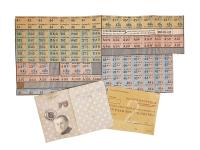
Coupons and personal ID card from Dubbeldam
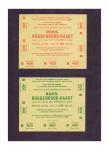
Ration coupons from Dordrecht
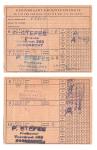
Coupons and ration cards of Dordrecht.
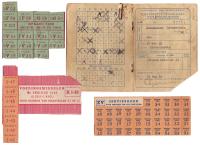
Ration card and various coupon sheets.
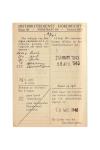
Ration card on medical grounds.
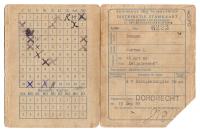
Ration cards 1st model of the Bosman family.
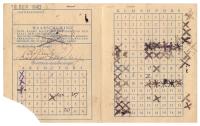
Ration cards 1st model family In t Veld (Van Buul).
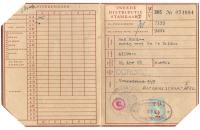
Ration cards 2nd model family in t Veld (van Buul)
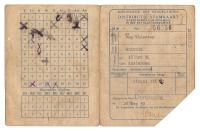
Ration cards of the Van Vlierden family from Dordrecht.
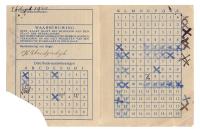
Ration cards 1st and 2nd model for Hendrika Stoutjesdijk/ Cornelis van Eldik.
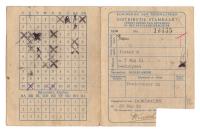
Ration card 1st model Mr. Pieter Dalm from Dordrecht.
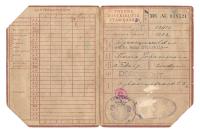
Ration card 2nd model Mrs. Teuna Johanna Groeneveld from Dordrecht.
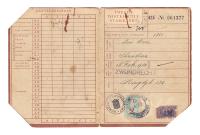
Ration card 2nd model Mrs. Christina den Boer from Zwijndrecht.
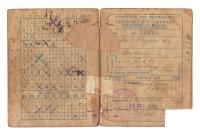
Ration cards 1st model of Mr. Bastiaan van Rooijen and his wife Maria Visser van Rooijen from Sliedrecht.
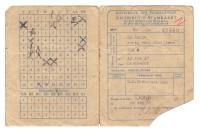
Ration cards of the Sluijters family from Dordrecht.
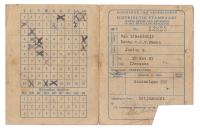
Ration card 1st model Josina van IJsseldijk - Zwijndrecht.
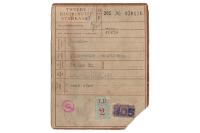
Ration card 2nd model Gijsbertus Hendrikus Snoek - Dordrecht.
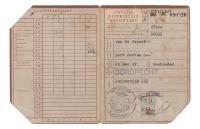
Ration card 2nd model Aart Bertus C van de Nadort - Dordrecht.
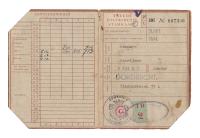
Ration card 2nd model Geertje Brand - Dordrecht.
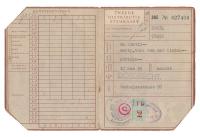
Ration cards 2nd model family van der Linden - Dordrecht.
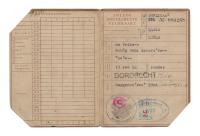
Distributioncards 2nd model family van Speerstra (de Vries) - Dordrecht.
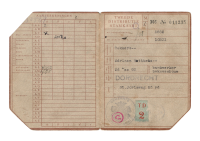
Ration card 2nd model Adriaan Mattheus Dekkers and ration card 1st model Cornelia Groeneweg - Dordrecht.
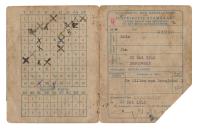
Ration card 1st model Jan Sels and ration card 2nd model Cornelia Adriana Amerika - Dordrecht.
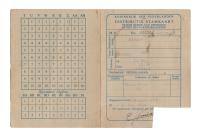
Ration card 1st model Jacoba Pleune - Zwijndrecht.
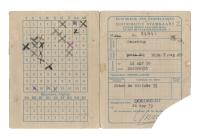
Ration card 1st model and 2nd model Dirk Tjerk Meursing - Dordrecht.