Dordrecht - foto 1 Dordrecht - foto 2 Dordrecht - foto 3 Dordrecht - foto 4 Dordrecht - foto 5 Dordrecht - foto 6
Home » Others » Warpocketbooks and Identification tags
Warpocketbooks and Identification tags

Warpocketbooks and Identification tags

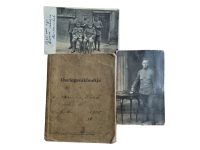
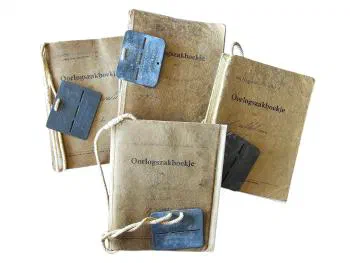
The warpocketbook and identification tag were issued upon induction. The soldier was required to carry these at all times. In the 1930s, the warpocketbook was a standard part of the personal equipment of Dutch conscripted soldiers. The booklet was issued upon induction and served as a means of identification and registration. It contained personal information such as name, date of birth, address, religion, marital status, occupation, and the names of the soldier’s parents. It also included military details, such as the regiment, draft year, clothing sizes, gas mask size, and vaccination records. The pocketbook was carried during refresher exercises and periods of mobilization.

The identification tag, often issued together with the pocketbook, was a zinc identification plate worn around the neck. During this period, the plate was still often etched with acid rather than stamped, which resulted in less durable legibility. Later, the tags were stamped. The plate typically listed the soldier’s name, date of birth, place of birth, and sometimes the unit. In the event that the soldier was killed, the plate was broken in half. The part attached to the cord remained with the soldier. The lower half of the plate, together with the warpocketbook, was sent to the Red Cross information bureau.
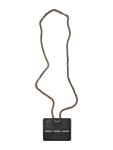
Identification Tag of Hendrik Louwman – Dordrecht
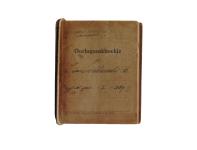
In the photos below you will find the military identification tag of Mr. Hendrik Louwman from Dordrecht. Hendrik Louwman was born on 26 April 1914 as the son of Willem Louwman and Dirksje van den Berg. He worked as a house painter and was called up on 4 October 1934 as a regular conscript with the 6th Infantry Regiment in Breda. After his initial period of service, he returned several times for training exercises.

Herkenningsplaatje Hendrik Louwman Dordrecht 6 RI

On 29 August 1939 he returned as part of the extraordinary call‑up for the general mobilization. It is unclear what his exact mobilization assignment was, as his specific unit is not known. However, his service record makes it clear that he was still mobilized during May 1940, since he was released from captivity on 10 June 1940. The identification tag shown below belonged to his warpocketbook and was meant to be worn around the neck. It is an early model, still handwritten by using acid. The later models were stamped and therefore much easier to read. The identification tag, also known as the “dog tag” or “death‑fall tag,” lists the soldier’s name, date of birth, and place of birth. In many cases, the soldier’s unit could also be found on the tag. This particular tag is still intact and almost in its original condition. Someone did, however, later trace over his date of birth with a marker.

Warpocketbook and Identification Tag of Bastiaan van Lelieveld - Dordrecht
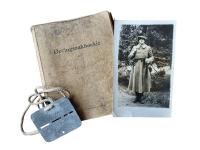
Below you can see the warpocketbook and the identification tag of Bastiaan van Lelieveld. Bastiaan was born on 9 September 1911 in Dordrecht. His parents were Cornelis van Lelieveld and Jozina Cornelia van Dooren. Bastiaan attended the 7th grade of primary school and then spent three years at the H.B.S. (Higher Civic School). He worked as an electrician. On 16 June 1931, Bastiaan was called up as a regular conscript of the 1931 draft from Dordrecht. He was assigned to the Regiment of Engineer Troops. On 28 November 1931, he was granted extended leave. On 9 September 1935, he returned for a refresher exercise, after which he went back on extended leave on 25 September. On 8 July 1937, he returned again for another refresher exercise. On 24 July, he was once more granted extended leave. On 1 October 1938, Conscripted Soldier Van Lelieveld was transferred to the 1st Regiment of Engineer Troops. On 11 April 1939, he returned again from extended leave. The text on the identification tag was written using acid.

Warpocketbook and Identification Tag of Pieter Buitendijk - Zwijndrecht
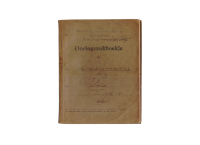
Oorlogszakboekje Pieter Buitendijk Zwijndrecht tweede wereldoorlog - mobilisatie

This is the warpocketbook and the identification tag of Pieter Buitendijk. Pieter was born on 1 September 1918 in Zwijndrecht. His parents were Jan Buitendijk and Barbera Verveer. Pieter attended the 7th grade of primary school. He worked as a factory laborer. On 5 April 1938, Pieter was called up as a regular conscript of the 1938 draft from Zwijndrecht. He was assigned to the 2nd Regiment of Hussars. On 24 February 1939, he received the qualification: exceptionally skilled hand‑grenade thrower. On 3 April 1939, he was transferred to 1‑4 R.H. On 1 July 1939, he went on extended leave, and one day later he was reassigned to the 2nd Regiment of Hussars. On 29 August 1939, conscripted soldier Buitendijk was called up again due to the General Mobilization. On 18 December 1939, Pieter Buitendijk was appointed as a conscripted trumpeter.

He served as a soldier during May 1940, although it is unclear where. The 2nd Regiment of Hussars was deployed near Dordrecht in May 1940, so it is likely that Pieter Buitendijk fought in Dordrecht during those days. On 25 May 1940, he was granted extended leave.

Warpocketbook of Johan Balthasar Onderwater - Zwijndrecht
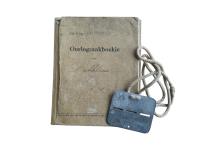
This is the warpocketbook of Johan Balthasar Onderwater. Johan was born on 12 June 1913 in Zwijndrecht. His parents were Jacobus Onderwater and Antonides Sjoukje. Johan attended the 7th grade of primary school and completed a course to become a driver‑mechanic.

On 4 October 1933, Johan was called up as a regular conscript of the 1933 draft from Steenwijk. He was assigned to the III Battalion of the Regiment of Engineer Troops, where he served as a mechanic‑motor fitter. On 17 March 1934, he was granted extended leave. On 12 May 1937, Johan voluntarily enlisted in the Volunteer Landstorm Motor Service Corps. On 11 April 1939, he returned from extended leave. He was presumably mobilized, as on 21 May 1940 he was again granted extended leave. On 15 July 1940, Volunteer Soldier Onderwater was honorably discharged from the Landstorm due to the dissolution of his position. On that date, he reverted to regular conscript status and was transferred to the Motor Service Corps, being on extended leave.

The identification tag is missing from this warpocketbook

Warpocketbook and Identification Tag of Jacobus Dubbeldam – Dordrecht
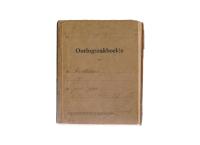
Warpocketbook and Identification Tag of Jacobus Dubbeldam – Dordrecht

This is the warpocketbook and identification tag of Jacobus Dubbeldam. Jacobus was born on 8 September 1919 in Dordrecht. His parents were Dirk Dubbeldam and Neeltje Geertrui Antje Hendriksen. Jacobus attended primary school and worked as a factory laborer. On 24 October 1938, he was called up as a regular conscript of the 1939 draft from Dordrecht. He was assigned to the 6th Infantry Regiment. On 25 May 1940, he was granted extended leave. It is therefore very likely that he served with the 6th Infantry Regiment—or with a wartime regiment attached to 6 R.I.—during May 1940.

With this warpocketbook, a stamped identification tag has been preserved.

Warpocketbook Jan Dubbeldam – Sliedrecht
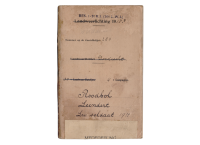
Below you can see the warpocketbook of Jan Dubbeldam. Jan was born on 20 October 1909 in Sliedrecht. His parents were Wouter Dubbeldam and Martijntje Weggers. Jan worked as a merchant (manufacturer). On 20 March 1929, Jan was called up as a regular conscript of the 1929 draft from Sliedrecht. He was assigned to the 6th Infantry Regiment. On 3 September 1929, he was granted Extended Leave. On 11 September 1933, he returned for a refresher exercise, after which he went back on extended leave on 23 September. On 11 April 1939, he returned again, presumably due to pre‑mobilisation. On 26 May and 10 June 1939, he was again granted extended leave, and he returned on 29 August 1939 due to the general mobilisation.

Jan first served near Alkmaar, then in Delft, and at the end of 1939 he was sent to Leusden to guard the Bruine Burgersluis. He came through the May Days unharmed.

This booklet does not include an identification tag. However, it does contain a blood group card. Jan had blood group A.