
Air protection service Dordrecht
On this page, you will find everything related to air protection (L.B.) or air protection service (L.B.D.) in Dordrecht.* 1 2 3
On March 7, 1936, the Dutch Association for Air Protection (N.V.L.) was established. The focus of the N.V.L. was self-protection, where the association primarily reached out to the citizens of the Netherlands to provide information on the air protection measures they could take themselves.
Shortly thereafter, on April 23, 1936, the Air Protection Act was introduced. The act meant that municipalities in the Netherlands had to take their own measures against attacks from the air and each municipality had to have its own air protection service (L.B.D.). Initially, this L.B.D. had the same goal in mind: to provide information to the civilian population. The pre-war L.B.D. was largely made up of volunteers. The L.B.D. also dealt with the construction of air-raid shelters, provided first aid courses, and offered education on fire prevention.
After the surrender in 1940, the German occuppiers were not satisfied with the existing structure of the L.B.D. They viewed the high number of volunteers as an obstacle to the professionalism of the organization. Consequently, individuals were appointed as employees of the L.B.D. These employees became civil servants dedicated to L.B.D. affairs. As a result, the L.B.D. saw an expansion of its responsibilities. These responsibilities included enforcing blackout measures, operating air-raid alarms, providing first aid to victims during bombings, and firefighting.
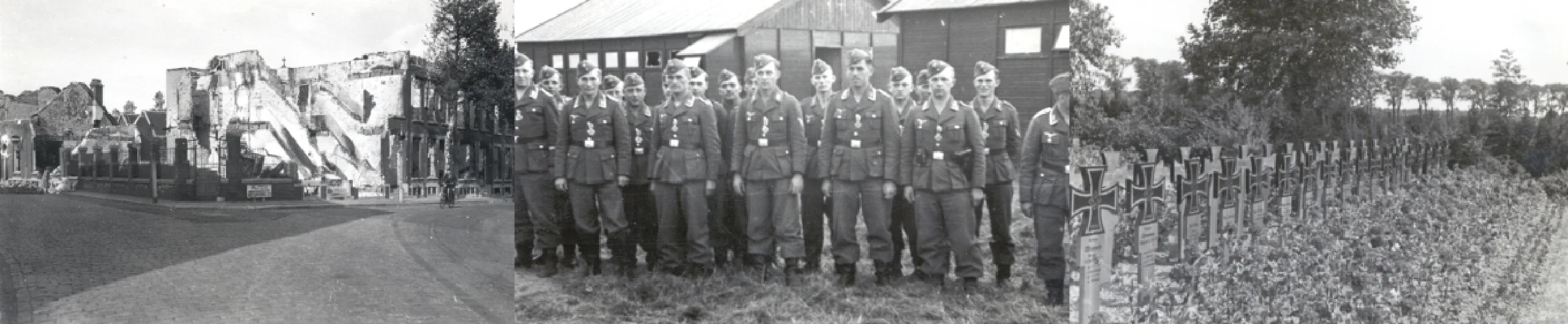
Dordrecht also had an air protection service, and it proved to be necessary. The city was bombed three times by the Allies during World War II. The most well-known bombing occurred at Merwestein Park, where the headquarters of the German 15th Army were located. On October 24, 1944, five squadrons of Royal Air Force Hawker Typhoons conducted a bombing raid on the park. The damage was extensive. While the Dordrecht resistance claimed that there were many German casualties, including generals among the fallen, it was mainly the civilian population that was affected. The estimated number of fatalities is 69.
During the war, Dordrecht was also subjected to two more Allied air bombings: on January 22 and January 28, 1945. In both cases, the target was Villa Simpang, where the German Ortskommandantur was situated. The bombing on January 22 was a failure, as only surrounding streets were hit, resulting in more civilian casualties and significant damage to houses. However, during the bombing on January 28, the villa was completely destroyed.
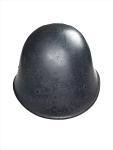
1. The M40 civil air protection helmet
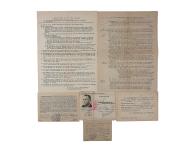
2. Document set LBD Dordrecht
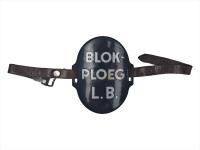
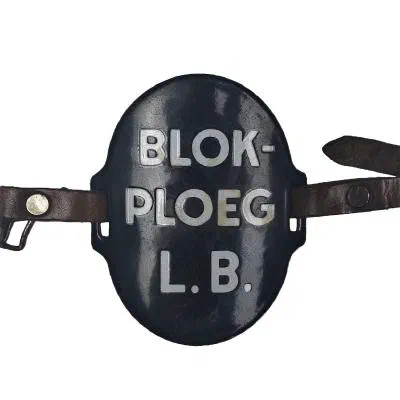
3. Block Warden (L.B.) armband
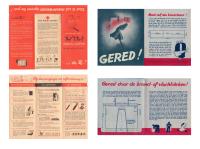
4. Air Protection brochures Dordrecht
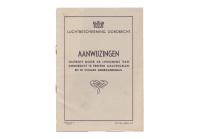
5. Instructions for air protection in Dordrecht
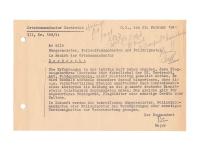
6. Message from the Ortskommandatur Dordrecht
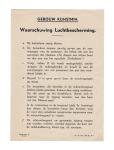
7. Air Protection Warning - Kunstmin Building
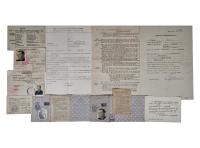
8. Documentset LBD Mr. A. Poots
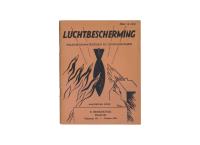
9. Air Protection - Safety Measures During Air Raids
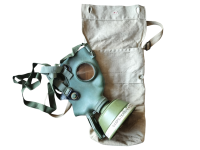
10. LBD gas mask in bag - Dordrecht